
The port that does things differently is making the Green Freeport stronger
April 28, 2026
In this second article in our Partner Spotlight series focused on Port of Inverness, we learn more from CEO Sinclair Browne about its unique capabilities and how it has become a differentiator for the Green Freeport proposition.
One of the things that surprises people about Inverness and Cromarty Firth Green Freeport is that it is not a single physical place. It’s made up of six different sites across the Highlands, and each of those sites plays its own, critical role.
Each has its own strengths, capabilities and opportunities. Some are geared towards large-scale offshore infrastructure, others towards manufacturing or assembly. The one that stands out as being a little different is Port of Inverness.
A network of sites with a shared purpose
Its role is not defined by competing with other facilities within the Green Freeport, but by complementing them and strengthening the overall offer for international investors considering potential investment sites.
Sinclair Browne, CEO of Port of Inverness, explained that the position the port would play was clear from the very beginning, even before ICFGF was selected by the UK and Scottish governments as one of only two Green Freeports in Scotland.
He said: “We felt that as the Port of Inverness, representing the Highland capital, we had to be part of the journey and part of that bidding process. Collectively with the other individual ports we provided a compelling case.
“We’ve got a track record in delivering success for our stakeholders, and the Green Freeport was seen as essential to the future. We are very much focused on local people and local benefit, and we could see the opportunity this presented for the Highlands.”
The collective strength sits at the heart of ICFGF’s offering. Rather than exactly duplicating capability, each partner contributes something distinct, and combined the region is a true European hub for the future of renewable energy.
A proven track record in renewable energy
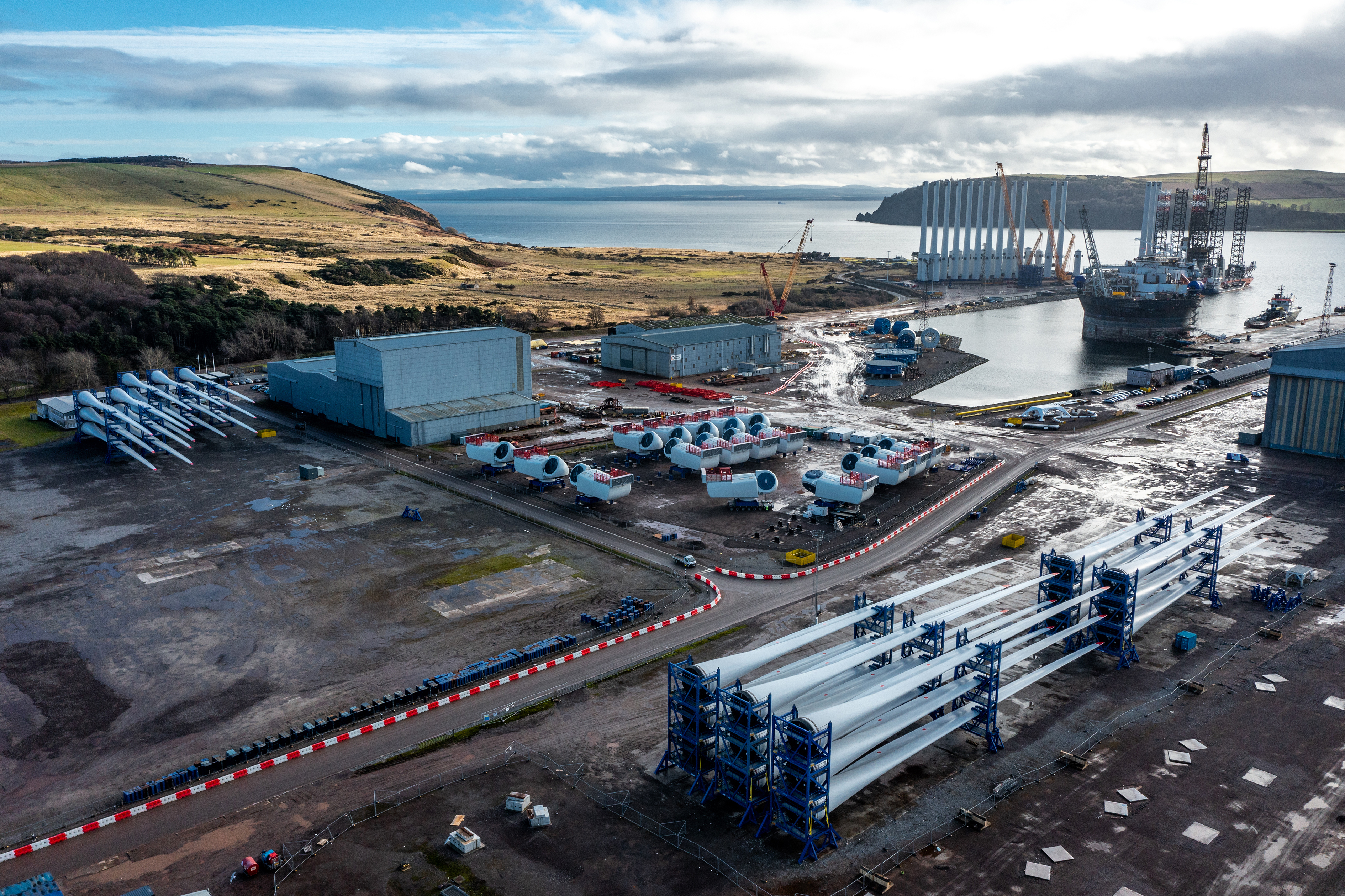
Over the past decade, the Port of Inverness has quietly established itself as one of the leading ports in the country for handling onshore wind components. This makes it different from other sites geared towards offshore wind, but also means it plays a critical supporting role that strengthens the region’s overall proposition.
Sinclair explained: “I saw that we could close the circle in terms of the Highland renewable energy offering. You’ve got the larger ports focusing on offshore wind and large-scale manufacturing – we fit neatly into a complementary role.
“We’re driving onshore wind and we’re ready to support pumped storage schemes, which help balance the grid. Those pumped storage schemes are effectively the battery for offshore wind and come into play when offshore wind isn’t generating electricity. That’s where we fit in.
“When I came on board at Port of Inverness, we made a conscious decision to target renewable energy, particularly onshore wind. It wasn’t easy at the start because we didn’t have a track record. People would say: ‘come back when you’ve got one’.
“But we got that first opportunity in 2012, and from there it built. Since then, more than 250 complete wind turbines have passed through the Port. That’s probably 20 to 25 wind farms supplied from Inverness, supporting clean energy generation across Scotland.
“We don’t see ourselves at the front line of offshore wind in terms of manufacturing or assembly, but we are very much in a supporting role. We can provide storage, laydown space, and facilities for backup industries.
“There’s also a big opportunity around operations and maintenance. A lot of that is desk-based, such as project management, monitoring, research and development, and Inverness is ideally placed for that. We’ve got the airport 11 miles away, a railway station within walking distance, and a strong local workforce right on our doorstep.”
Expanding capacity to support future generation
Looking ahead, the Port of Inverness is not standing still. Recent research into the Port’s economic impact showed there is the potential to more than double income, generating tens of millions in additional economic value and supporting hundreds of jobs, the port’s future growth will play a key role in delivering the Green Freeport vision.
Sinclair said: “Our ambition is to more than double our income over the next 10 years and add over £41 million in GVA to the Highland economy. That could support up to 640 jobs, which is significant for the region.
“We are about balance – onshore and offshore energy, infrastructure and community impact, and growth and long-term responsibility of a trust port.
“We have a very important role to play in strengthening the offer. We’ve got the infrastructure, we’ve got the people, and we’ve got the environment to support investment.
“The facilities we’re developing will stand up against anything else in Scotland or the UK. For anyone looking to invest in the Highlands, we’re ready – and we’re ready to play our part in making the Green Freeport a success.”